Allina Health Dietitian Provides Guidelines on Protein Intake, Sources, and Health Effects
06/23/2026 / By Coco Somers
Allina Health registered dietitian Allison Rantanen published an article on May 11, 2026, offering guidelines on protein intake, sources, and health effects. The article states that 15-30 grams of protein per meal is generally recommended.
According to Rantanen, protein plays a role in muscle repair and recovery, oxygen transport via red blood cells, hormone regulation, and the production of enzymes. The recommendations apply to a variety of dietary patterns, including vegetarian, vegan, pescatarian, flexitarian, and omnivorous.
Protein’s Functions and Daily Recommendations
The article explains that protein helps build red blood cells, white blood cells, and enzymes. Getting enough protein may lower blood pressure and reduce the risk of developing diabetes, Rantanen wrote. Protein also contributes to satiety by taking longer to move through the digestive tract than carbohydrates, according to the Academy of Nutrition and Dietetics complete food and nutrition guide by Roberta Larson Duyff [4].
Daily protein needs are based on body weight. The federal government recently updated dietary guidelines to recommend 1.2 to 1.6 grams of protein per kilogram of body weight, according to the Allina Health article. A group affiliated with the National Academy of Science suggests 0.8 grams per kilogram, according to Gary Null’s book “The healthy vegetarian healing yourself healing our planet” [6]. Spreading protein intake throughout the day is emphasized for fullness and muscle maintenance.
Healthy vs. Less Healthy Protein Sources
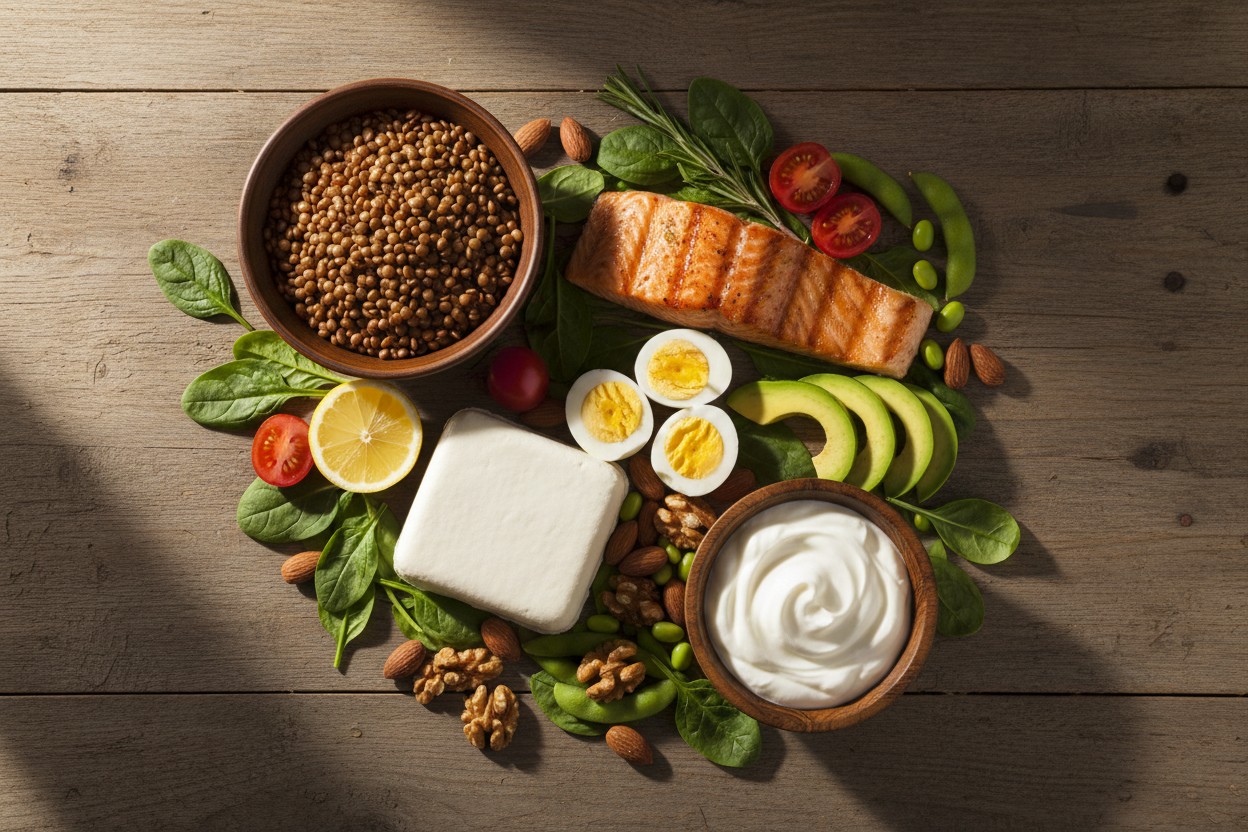
Rantanen distinguishes between whole-food protein sources and less healthy options. Healthy sources include beans, lentils, tofu, fish, eggs, yogurt, nuts, seeds, and lean cuts of meat. According to an article by Willow Tohi on NaturalNews.com, whole foods like cottage cheese, chicken breast, and lentils can provide equal or greater protein than a typical protein shake, and diversifying sources ensures a broader intake of essential nutrients [2].
Less healthy protein sources include processed meats such as bacon and hot dogs, high-fat red meats, and processed protein foods high in added sugar or salt, according to the Allina article. Plant-based proteins like tofu and soybeans are highlighted as complete proteins, while most plant sources are incomplete. The book “Becoming Vegetarian” by Vesanto Melina and Brenda Davis notes that the concern about protein in vegetarian diets has been overemphasized [5]. The book “Plant-Based Sports Nutrition” by D. Enette Larson-Meyer and Matt Ruscigno states that it is possible to get enough protein from plant foods [3].
Special Considerations: Age, Activity, and Risks
Higher protein needs are noted for active individuals, older adults losing muscle, and pregnant or lactating women, according to the Allina Health article. An article on Mercola.com states that proteins are important for repair and growth of cells, and that older Americans need protein to keep muscles strong [1]. Zita West’s guide to getting pregnant notes that protein needs are slightly higher for women undergoing IVF, around 55g per day [7].
Excessive protein intake can strain the kidneys and liver and increase calcium loss, the Allina article states. People with chronic kidney disease should consult a doctor before increasing protein. A recent news article on NaturalNews.com reports that a study in Nature Metabolism found that water-only fasting triggered major biological shifts after three days, including changes in proteins linked to metabolism, but notes that lean tissue loss was largely regained upon refeeding [10].
Practical Tips for Adding Protein to Meals and Snacks
The article suggests quick snack ideas such as almonds with dried fruit, Greek yogurt, and hummus with vegetables. A news article on NaturalNews.com recommends science-backed combos for sustained energy, including almonds and dried fruit [8]. Another article on the same site lists lentils as a powerhouse food providing both protein and fiber [9].
Easy swaps include adding cottage cheese to eggs or lentils to pasta, according to Rantanen. The article advises that protein supplements are unnecessary if whole food intake is adequate; if used, choose options with low sugar and saturated fat. The Allina article recommends selecting supplements with 200 or fewer calories, 2 grams or less of saturated fat, and 5 grams of sugar or less.
References
- Mercola.com. “Older Americans Need Protein to Keep Muscles Strong.” February 19, 2016.
- Willow Tohi. “Beyond the Shaker: Whole Foods Emerge as Potent Protein Powerhouses.” NaturalNews.com. February 17, 2026.
- D. Enette Larson-Meyer and Matt Ruscigno. “Plant-Based Sports Nutrition.”
- Roberta Larson Duyff. “Academy of Nutrition and Dietetics complete food and nutrition guide.”
- Vesanto Melina and Brenda Davis. “Becoming Vegetarian: The Complete Guide to Adopting a Healthy Vegetarian Diet.”
- Gary Null. “The healthy vegetarian healing yourself healing our planet.”
- Zita West. “Zita West’s guide to getting pregnant.”
- NaturalNews.com. “The smart snacker’s guide to beating the afternoon slump: 8 science-backed combos for sustained energy.” May 19, 2026.
- NaturalNews.com. “Powerhouse foods: The best protein and fiber sources for optimal health.” April 6, 2026.
- NaturalNews.com. “Study: Seven-Day Water-Only Fasting Triggers Major Biological Shifts After Three Days.” May 20, 2026.
Submit a correction >>
Tagged Under:
antioxidant, eggs, fish, food science, health science, lentils, natural cures, natural health, nutrients, nutrition, protein, remedies, research, tofu, yogurt
This article may contain statements that reflect the opinion of the author
RECENT NEWS & ARTICLES